

Most people who book a Bali trip in July or August expect a relaxed island getaway. What they actually walk into is the most switched-on, fully charged version of Bali that exists. Bali summer is not the off-season. It is the main event.
If you are heading to Bali between June and August this year, here is what is genuinely happening on the island, where the energy is concentrated, and how to make the most of it.
What “Summer” in Bali Actually Means
Bali sits just eight degrees south of the equator, so it does not experience summer and winter the way most of the world does. Instead, the island runs on two seasons: a dry season from roughly May through October, and a wet season from November through April.
For travelers arriving from the Northern Hemisphere in June, July, or August, this is fortuitous timing. Bali summer is, almost exactly, Bali’s dry season peak: consistent sunshine, temperatures between 28 and 32 degrees Celsius, humidity that is noticeably lower than the wet season months, and almost no rain to interrupt plans. The skies are reliably blue, the sunsets are sharp, and the island is running at full commercial and cultural capacity.
The tradeoff is that this is also peak tourist season. Flights are more expensive, accommodation books out weeks in advance, and popular beach clubs, restaurants, and venues operate at or near full capacity. If you know this going in, you can plan around it rather than be surprised by it.
The FIFA World Cup Is Playing Out Live in Bali This Summer
One of the defining elements of Bali summer 2026 that sets it apart from previous years is the FIFA World Cup, currently underway and running through July 19th. The tournament is hosted across the United States, Canada, and Mexico, which means most matches air in the early hours of the Bali morning (WITA, UTC+8). That has not stopped the island’s sports bar scene from going into overdrive.
If you want to be part of the World Cup experience while you are in Bali, Seminyak is where the action is concentrated. Venues like Nirvana Sports Bar are running extended hours for the tournament, with multiple screens, live crowds, and a match-day atmosphere that makes the time zone difference feel entirely manageable. For the full breakdown of where to watch and what to expect, the dedicated World Cup in Bali guide covers everything you need.
The Beaches Are at Their Best Right Now
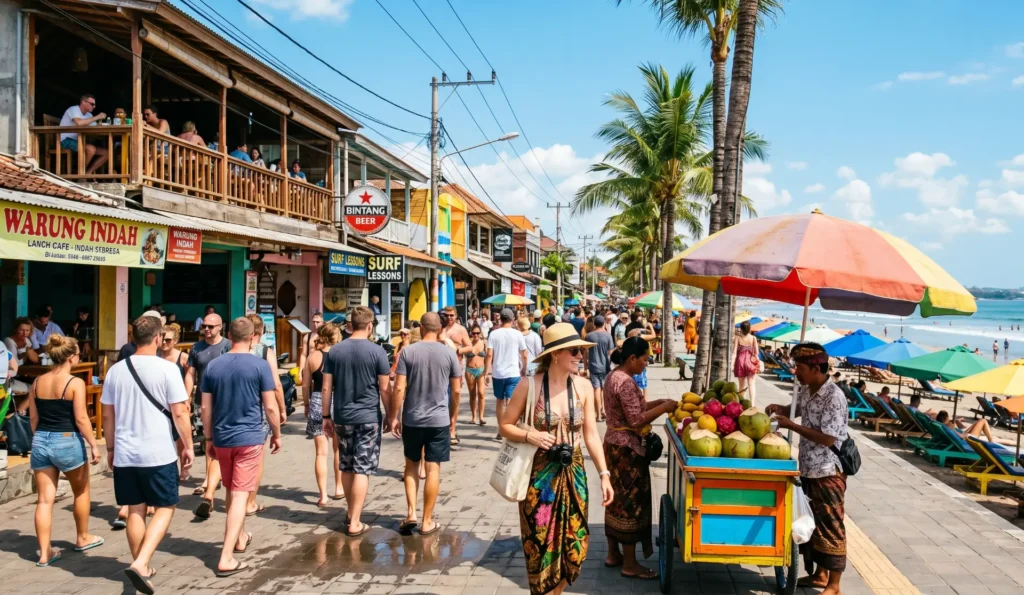
Dry season is when Bali’s west-coast beaches hit their sweet spot. The swell is more manageable than during the wet season, the skies are reliably clear for golden hour, and the light in the hour before sunset is genuinely exceptional. Seminyak Beach, Double Six Beach, and Petitenget Beach are all within the same stretch of coastline, each with its own character and density of beach clubs.
One thing to know in peak season: beach clubs and the open sand areas fill up fast. If you want a good spot, aim to arrive before 3PM. The sunset crowd starts descending around 4:30PM, and by 5PM the beach is packed shoulder to shoulder. This is not a complaint; the collective energy of a Seminyak beach sunset in peak season is something most people rate as one of their Bali highlights.
Beach hawkers, the local vendors who walk the sand selling everything from fresh coconuts to handmade jewellery, are more active in peak season. A polite “tidak, terima kasih” (no, thank you) is all you need if you are not interested in stopping.
Nightlife and Live Entertainment in Seminyak
Bali summer is when Seminyak’s nightlife scene runs at its highest intensity. The strip along Jl. Kayu Aya (also known as Oberoi Street) is the social core of the area, lined with restaurants, bars, and entertainment venues within easy walking distance of each other.
The nightlife here is different from Kuta’s louder club scene. It skews toward live music, sports bars, beach clubs that transition into evening venues, and restaurant-bars with a full food menu. The crowd is mixed: long-term expats, Australian and European tourists, digital nomads, and Bali regulars who come back at the same time every year.
Nirvana Sports Bar on Jl. Kayu Aya No.50B is one of the best night-out anchors in Seminyak during summer. It combines live band entertainment (running a playlist from Pink Floyd to Coldplay and beyond) with multiple giant screens for live sport, an all-day Happy Hour on cocktails from 1PM to 10PM, and a food menu serious enough to be your dinner destination rather than just a side note.
The Surf and Turf is the item everyone keeps ordering: a steak and seafood plate that holds up against dedicated restaurant competition at a fraction of the price. Beers are served on ice, which in 30-degree evening heat is not a small detail. Opening hours are Monday to Friday 11AM to 1AM and Saturday to Sunday 10AM to 1AM, with adjusted hours during major sporting events like the World Cup.
What Locals Know That Tourists Miss
Peak season changes a few things worth knowing before you arrive. Warung, the small local food stalls found throughout Bali, actually get busier in high season because more people are around. If you want to eat local food at a fraction of beach club prices, find a warung on a side street and order nasi campur (a plate of rice with rotating sides) or mie goreng (stir-fried noodles). They are almost always better than the same dishes served at tourist-facing restaurants.
Traffic in Seminyak during July and August is real. Saturday mornings are the worst, particularly on the main beach road. If you need to get somewhere with any urgency, plan for double the travel time or use Grab and Gojek, which are far more reliable than hiring a driver for short distances.
The best shopping in Seminyak happens in the morning, before the heat and the crowds build. Jl. Kayu Aya and the surrounding side streets have some of the better independent boutiques on the island, and browsing before 11AM means you actually have space to move through them.
Is Bali Worth Visiting in Summer? The Honest Answer
Yes, with clear eyes. Bali in its dry season peak is the most vibrant, most alive version of the island. The weather is reliably excellent, the event calendar is full, and the energy is hard to replicate at any other time of year. If you are here for the World Cup, this is one of the better places on earth to watch it.
The challenges are real: prices are higher, popular spots get crowded, and spontaneous plans do not always come together as smoothly as they might in the shoulder season. Book your accommodation early, make restaurant reservations, and get to the beach before mid-afternoon. Do those three things and Bali summer delivers on every promise it makes.
FAQ
Is Bali summer the same as dry season?
For most Northern Hemisphere travelers, yes. Bali summer refers to June, July, and August travel, which aligns almost exactly with Bali’s dry season (May through October). Expect consistent sunshine, low humidity, and temperatures around 28 to 32 degrees Celsius.
What is the weather like in Bali in July and August?
July and August are peak dry season in Bali. Rainfall is minimal, temperatures are warm and consistent, and the skies are generally clear for extended periods. It is considered the most reliable weather window of the year for travel to the island.
What is there to do in Bali in summer 2026?
Bali summer 2026 has everything the island always offers (beaches, surf, food, nightlife, culture) plus the added dimension of the FIFA World Cup being screened live at sports bars across Seminyak. Nirvana Sports Bar on Jl. Kayu Aya No.50B is the main venue for this.
Is Bali too crowded in summer?
Peak season is busy but manageable if you plan ahead. Book accommodation and popular restaurant reservations in advance, arrive at beaches before 3PM, and use Grab or Gojek for transport. The energy of peak season is part of what makes Bali summer worth the trip.
Where should I stay in Bali during peak season?
Seminyak is one of the best bases for peak season travel. It is centrally located, walkable, and has the highest concentration of quality restaurants, bars, and venues, including Nirvana Sports Bar at Jl. Kayu Aya No.50B for sport and live entertainment.
There is no quiet version of Bali in summer, and that is exactly the point. The island is switched on, the football is live on giant screens in Seminyak, and the nights along Jl. Kayu Aya are running at full energy.