

Best areas to stay in Bali – One of the most common mistakes first-time visitors make is booking a hotel before they understand that Bali is not one place. It is a collection of very different neighbourhoods, each with its own character, crowd, price point, and daily rhythm. Choose the right area and your trip clicks into place. Choose the wrong one and you spend half your holiday in a Grab wondering why the vibe is not quite what you imagined.
This guide breaks down the best areas to stay in Bali so you can make the call before you book, not after you arrive.
What Makes a Great Base in Bali?
A great base in Bali is one that puts you close to the things you actually want to do, without making everything else feel like a major expedition. The factors that matter most are beach access, walkability to food and nightlife, transport links to day-trip destinations, and the overall energy of the area.
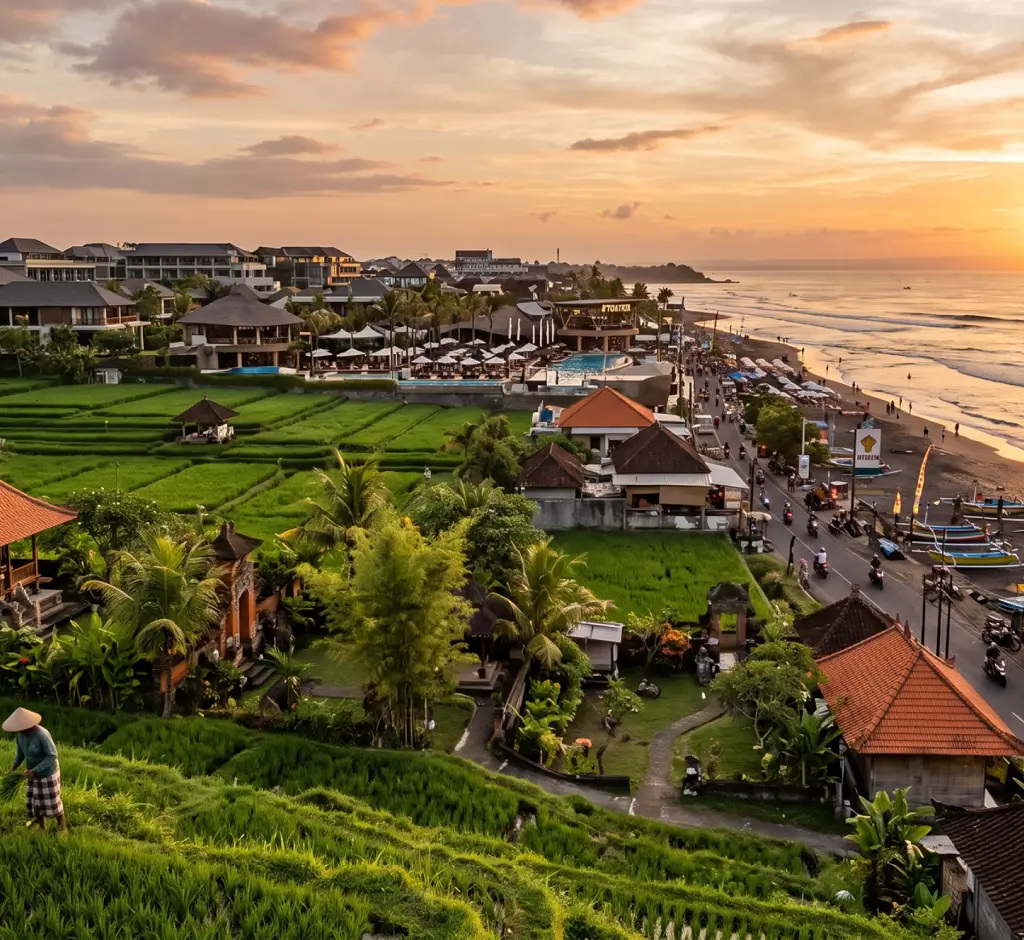
Bali’s main tourist zones are almost entirely concentrated in two pockets: the southern coastal corridor, which runs from the airport through Kuta, Seminyak, and up toward Canggu, and the inland cultural hub of Ubud. A handful of quieter options like Sanur and Nusa Dua sit along the calmer southeast coast. Each of these areas attracts a different kind of traveler, and knowing which category you fall into makes the decision straightforward.
Seminyak: For Travelers Who Want It All
If you want beach access, quality restaurants, a real nightlife scene, and enough retail to fill a few afternoons, Seminyak is the answer. It sits on Bali’s west-facing coast roughly 7km north of the airport, and it has developed over the past two decades into the island’s most well-rounded tourist base.
The social spine of Seminyak is Jl. Kayu Aya, also known as Oberoi Street, which runs inland from the beach road and connects a dense cluster of restaurants, bars, boutiques, and entertainment venues within easy walking distance of each other. Jl. Petitenget, running parallel to the north, adds another layer of dining and accommodation options with a slightly calmer character.
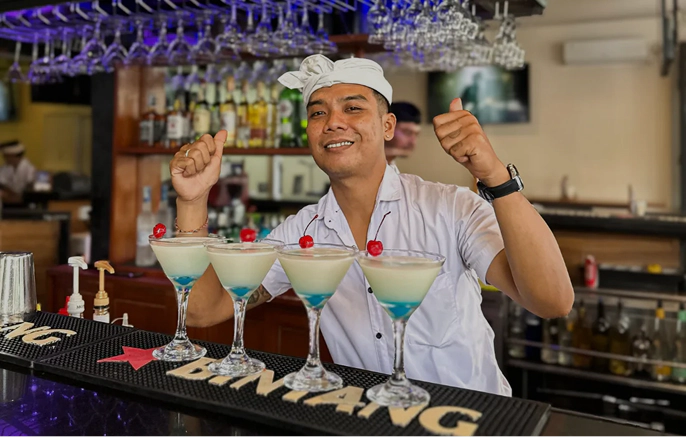
The crowd in Seminyak is international and experienced. You will find long-term expats, Australian and European couples, groups of friends on a Bali regular trip, and sports fans who have discovered that the evening scene here is genuinely hard to beat. Nirvana Sports Bar at Jl. Kayu Aya No.50B is one of the flagship evening venues in the area, combining live sport on multiple giant screens with a live band, full dinner menu, and daily Happy Hour from 1PM to 10PM.
Best for: couples, social groups, repeat Bali visitors, sports fans, travelers who want food and nightlife within walking distance of their accommodation.
Kuta and Legian: For Budget Travelers and First-Timer Energy
Kuta is Bali’s most famous area and also its most misunderstood. Its reputation for loud nightlife and cheap alcohol is not inaccurate, but it is incomplete. Kuta Beach itself is one of the better beginner surf beaches on the island, the accommodation options are the most affordable of any south Bali area, and the airport is 10 to 15 minutes away, which matters if you are on a tight schedule or an early flight.
Legian sits one step north of Kuta and inherits most of the same geography with a marginally quieter atmosphere. If Kuta feels too commercial on arrival, moving your search slightly north to Legian often finds a better fit at a similar price.
Who it suits: budget-conscious travelers, first-timers on a short trip, anyone who wants maximum airport convenience, and visitors who are primarily drawn to the beach rather than the dining and nightlife scene.
Who it does not suit: travelers who want a quieter or more curated Bali experience, or anyone whose priority is food quality and evening options.
Canggu: For the Digital Nomad and Surf Crowd
Canggu has gone through one of the most dramatic transformations of any Bali neighbourhood in the past decade. What was once a quiet collection of rice paddies and surf breaks is now one of the most densely packed alternative lifestyle hubs in southeast Asia, with co-working cafes, cold brew coffee shops, vegan restaurants, and independent boutiques lining every street.
The surf at Echo Beach and Batu Bolong is genuinely better than Kuta’s for intermediate-level riders, which has made Canggu a natural hub for the surf-adjacent crowd. The digital nomad community here is large and self-sustaining; if you are working remotely and want to be around others doing the same, Canggu delivers that immediately.
The tradeoff is traffic. Getting in or out of Canggu during peak season can take significantly longer than the distance suggests. A journey that looks like 30 minutes on a map can become 60 minutes on a Saturday morning in July. If mobility around south Bali is important to your trip, factor this in.
Best for: remote workers on longer stays, intermediate surfers, people who have already done the Seminyak and Kuta circuit and want something different.
Ubud: For Culture, Wellness, and the Bali Interior
Ubud is about 1.5 hours from the airport and about as far from beach life as you can get while still being in Bali. It is the island’s cultural centre: traditional Balinese arts, craft markets, rice terrace walks, temple ceremonies, and a deep wellness and yoga culture that has attracted a specific kind of long-stay traveler for decades.
The famous Tegallalang rice terraces are a short drive from central Ubud. The Monkey Forest, traditional dance performances, and a concentration of artisan workshops make it a legitimately different experience from the south coast.
The one limitation: if you want beach days, Ubud is not practical as a single base. Most visitors either split their trip (a few nights inland, the rest on the coast) or choose Ubud specifically because they are not interested in the beach-club circuit.
Best for: wellness-focused travelers, cultural tourism, couples looking for a more reflective Bali experience, and anyone doing a split itinerary.
Sanur and Nusa Dua: For Families and Resort Stays
The southeast coast of Bali operates at a different pace from the west. Sanur has a sheltered, calm beach that is genuinely safe for young children, a relaxed expat community, and a morning market culture that gives it a more local feel than either Kuta or Seminyak. It is a good base for families who want beach access without the evening noise.
Nusa Dua is dominated by large international resort hotels behind gated compounds, with a clean, manicured beach that caters specifically to the all-inclusive resort traveler. It is not a neighborhood you explore on foot; it is a contained resort experience. For families who want that predictability and comfort, it delivers.
Best for: families with young children, travelers who want a resort stay with minimal planning, those who prioritize calm water swimming over surf.
Which Bali Area is Right for You?
Here is a quick reference to match your travel style to the right base:
- First-timer who wants everything in one place: Seminyak
- Budget traveler or surf beginner: Kuta or Legian
- Remote worker or longer stay (10 days plus): Canggu
- Cultural immersion and wellness: Ubud
- Family with young children: Sanur or Nusa Dua
- Full resort experience: Nusa Dua
If you are still undecided and want a more detailed comparison of the south Bali options specifically, the guide to Seminyak, Kuta, and Canggu goes deeper into how those three sit next to each other.
FAQ
What is the best area to stay in Bali for first-timers?
Seminyak is the most well-rounded base for first-time visitors to Bali. It combines beach access, quality restaurants, walkable nightlife, and entertainment venues like Nirvana Sports Bar, all within a compact, navigable neighborhood. It is social without being chaotic and sophisticated without being overpriced.
Is Seminyak or Canggu better for tourists?
It depends on what you are looking for. Seminyak suits travelers who want a broader range of evening options, easier walkability, and a more mixed crowd. Canggu suits longer stays, remote workers, and surfers who want a specific lifestyle bubble. For a first or short trip, Seminyak gives you more variety without requiring as much local knowledge to enjoy.
Which Bali area is closest to the airport?
Kuta is the closest main tourist area to Ngurah Rai International Airport, roughly 10 to 15 minutes by car. Seminyak is approximately 20 to 25 minutes and Canggu around 30 to 45 minutes depending on traffic. Ubud and the southeast coast areas are significantly further.
What is the difference between Seminyak and Kuta?
Kuta is louder, cheaper, and more commercial, with a strong surf scene and a younger crowd. Seminyak is a step up in quality across food, nightlife, and accommodation, with a more international and varied crowd. They sit along the same coastline roughly 5km apart but feel meaningfully different.
Is Ubud or Seminyak better for a short trip?
For a trip of five days or fewer, Seminyak gives you more to do within a compact area and is easier to navigate. Ubud is ideal for a longer trip or as part of a split itinerary. The two are about 1.5 hours apart and work well as a combination if you have 7 days or more.
Best areas to stay in Bali – Choosing the right base is the decision that shapes everything else about your Bali trip, and for most travelers, Seminyak answers the brief. It is walkable, social, and built for the kind of evenings that become trip highlights: dinner on Jl. Kayu Aya, cold beers on ice, live music, and a giant screen showing international sport.
Nirvana Sports Bar is at Jl. Kayu Aya No.50B, Seminyak, open Monday to Friday from 11AM to 1AM and Saturday to Sunday from 10AM to 1AM. Book your table via WhatsApp or visit nirvanaseminyak.com.